Showing posts with label Africa. Show all posts

Monday, June 30, 2014

Mokèlé-Mbèmbé, Part 5: “The Real Brontosaurus of the Congo”

This very inaccurate  reconstruction of a Diplodocus is similar to what is being described from Lake Tele.


In the previous chapter, I told of the various expeditions to the Lake Tele area in search of a living brontosaurus. According to native descriptions the animal is 5-10 m (15-30 feet) long, much of which is neck and tail, with scaly reddish-brown to gray skin, a snake-like head that has a sort of fleshy frill on the back (which is often compared to a rooster’s comb in texture), and three webbed toes at the end of short legs. It may also have filaments growing on its head or neck and two pouches or pocket-like depressions near the junction of its neck and shoulders. The creature hides in the mud during the day with only its nostrils showing and travels and feeds mostly at night. It floats in the water, stretching its neck out to pluck fruit hanging from vines that lay low over the water. 

As any paleontologist will point out this description sounds nothing like a sauropod of any kind. In some ways, it is reminiscent of the older water dwelling dinosaurs of the 1020s to 1960s but in others, it is radically different than even those outdated theories.  This has caused some to dismiss the reports as either wishful thinking or accounts of a new species of lizard. However, there is a simple logical answer to the Congo sauropod reports and this answer was discovered way back in 1981.

Mokèlé-Mbèmbé, Part 4: The “Brontosaur” Reports

Typical depiction of the Mokèlé-Mbèmbé as a sauropod dinosaur


As previously mentioned the word Mokèlé-mbèmbé simply means ‘monster’. The ‘brontosaur’ that most people think of when hearing the name Mokèlé-mbèmbé is properly called the n’yamala. The n’yamala is known mainly from reports from the Lake Tele area that refers to an animal with a large body, long neck, and long tail that is intermediate in size between a hippo and a forest elephant. Most cryptozoologists are under the impression that these reports or those of a sauropod dinosaur or some unique herbivorous monitor lizard. Once the reports are fully examined however, the actual animal behind these reports is rather obvious.

Monday, April 7, 2014

Mokèlé-Mbèmbé, A Living Dinosaur? Part 3: Kasai Rex & Afroraptor

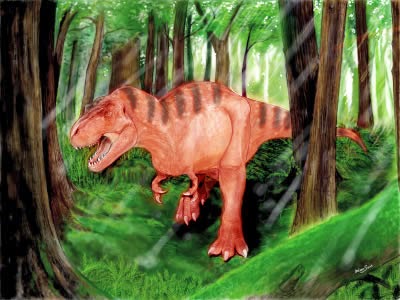
Artist impression of the Kasai Rex obtained by modifying clip art


Kasai rex is a darling of the internet. No discussion online of African dinosaurs can be made without someone claiming that the Kasai rex must be real because we have photos. The Kasai rex is supposedly a living Tyrannosaurus rex (and it is always T. rex rather than any theropod that was actually indigenous to Africa) that stomps about the Congo like Godzilla.

The glamor of this huge carnivorous theropod seems to cause people to lose their objectivity. I say this because as soon as one does even a few minutes of research the Kasai rex story dissolves into a huge pile of steaming manure.

Thursday, April 3, 2014

Mokèlé-Mbèmbé, A Living Dinosaur? Part Two: Native Art

Kuppenhole Rock Art


In the last post I reviewed the earliest reports of the so-called African Dinosaurs and found them inconclusive at best and outright hoaxes at the worst.  Several of these early sightings mention native rock art of these mysterious saurians. Maybe they can clear up the puzzle? 

Monday, March 3, 2014

Mokèlé-Mbèmbé, A Living Dinosaur? Part One: 1776 to 1939

Mokele-Mbembe according to Roy P. Mackal


Mokèlé-mbèmbé is a legendary water-dwelling creature of Congo River basin folklore, claimed to be a living sauropod by creationists and many cryptozoologists. In addition to a sauropod some claim there are living sivatheres, ceratopsians, stegosaurs, and even tyrannosaurs in the African Congo. To these people Central Africa is an actual Lost World that will disprove evolution

Unfortunately, no matter how much I would love to see a living dragon, once the actual reports are consulted the claims fall apart into wishful thinking, misquoted scientists, reports of known animals, reports of an unidentified rhinoceros, and hoaxes.